
Prominent Labor Activists You Should Know: Rosina Corrothers Tucker
It is March, and you know what that means. It is National Women’s Month, and as always, Guide to HR loves to be a part of the conversation regarding women’s impact on our society. As you may recall, last year, we celebrated women who fought in our military and opened so many doors for other women to join. We also celebrated women as first responders, brought attention to Equal Pay Day, and much more. This year is no different. We want to continue celebrating and honoring women who fight for equal rights and pay and who contribute to our ever-growing society. So join us in this conversation as we take this month to highlight some of the most prominent labor activists you should know. We will start this week with Rosina Corrothers Tucker.
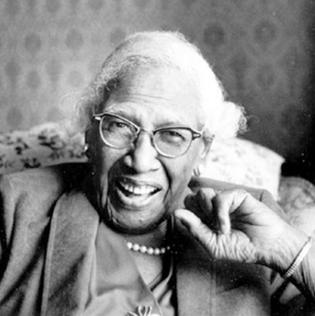
Rosina Corrothers Tucker
Rosina Budd Harvey Corrothers Tucker was born in Washington, DC, on November 4, 1881. She was one of nine children born to Lee Roy and Henrietta Harvey, both former slaves.
In 1897, while visiting her aunt in Yonkers, New York, Rosina met James D. Corrothers, a minister and poet. They later married in 1899 and had their son Henry Harvey Corrothers.
On February 12, 1917, her husband died from a stroke at the young age of 47. W.E.B. Du Bois eulogized his funeral. Shortly after, Rosina moved back to Washington, DC, and worked as a federal file clerk. She eventually met and married her second husband, Bertha “B.J.” Tucker, who was a Pullman porter, on November 27, 1918. Pullman porters were men who worked for the railroads as porters on sleeping cars. Their job was to carry passengers’ luggage, maintain the sleeping berths, and shine shoes. Pullman Company’s employees were mainly Black men. They worked an average of 400 hours monthly with little pay and no opportunities to excel.
The Brotherhood of Sleeping Car Porters
In 1925, the Brotherhood of Sleeping Car Porters (BSCP), a porters’ union, was formed. B.J. Tucker joined shortly after and began organizing with Rosina in Washington. Rosina and other porter wives attended and organized most of the union meetings since porters worked long hours and feared being fired if their employers learned about their union activities. Rosina and the BSCP’s president, A. Phillip Randolph, held secret meetings. She visited 300 porters at their homes in the Washington area to distribute literature, recruit more members, and collect dues. She also organized the local Ladies’ Auxiliary to raise funds for the union by hosting dinners, dances, and more.
It did not take long for the Pullman Company to learn about Rosina’s involvement in the union affairs. As retaliation, they fired her husband, but that did not stop her. She confronted her husband’s former boss and got him his job back. She later recounted that moment, saying:
After much struggle, more unfair treatment, and many long hours with little pay, the American Federation of Labor finally granted the BSCP a charter in 1935. This was the first time a national labor organization recognized a Black union. Rosina and other union members worked and fought so hard for the union’s progression, and they were finally being seen. In 1937, the BSCP signed an agreement with the Pullman Company to raise porters’ salaries, decrease long hours, and introduce a grievance process.
Rosina’s Achievements
It is fair to say Mrs. Tucker was courageous and tenacious. Nothing came easy for African Americans, especially Black women, during this time. Despite much progress and success as a labor and civil rights activist, Rosina’s leadership, authority, and organizing skills were often challenged and undermined by men. But that did not stop her. That is why she achieved so much more inside and outside her community. Here are some more of her achievements.
- She became the president of the Ladies’ Auxiliary, known as the Women’s Economic Council, in 1925. This position allowed her to continue her work within the union while also voicing her ideas regarding racial and gender equality. She paved the way for other women to join the union to expand further and develop ideas in their fight for civil rights. The Ladies’ Auxiliary soon formed alliances with other unions led by both women and men, Black and White. She led the coalition to fight in many events, including the Washington Women’s Trade Union League (WTUL) and National Negro Alliance (NNA) fight against racial discrimination in the grocers’ trade. She also led them in the WTUL’s fight for equality in laundry, domestic, hotel, and restaurant industries, which were mainly occupied by Black women.
- In the early 1940s, Rosina was a vital part of the March on Washington Movement. She also organized movements to boycott businesses that refused to employ Black workers and created more unions for women who worked in the education, laundry, and domestic services industries.
- “She lobbied Congress for labor and education legislation and testified before House and Senate committees on day care, education, labor, and D.C. voting rights.”
- In 1963, she continued to be active in her church and local politics after the passing of her husband.
- In 1982, she narrated a documentary about the union called Miles of Smiles, Years of Struggle.
- In 1986, at 104, she continued to travel the country for speaking engagements.
- She wrote an autobiography, My Life as I Have Lived It, which was published after her death in 2012.
Rosina died at age 105 on March 3, 1987, and today, we continue to recognize her as the hero she was. She fought and lived an honorary life we are happy to celebrate. Mrs. Rosina Budd Harvey Corrothers Tucker, you are appreciated.
Happy Women’s History Month.
Share this:
- Click to share on LinkedIn (Opens in new window) LinkedIn
- Click to share on X (Opens in new window) X
- Click to share on Facebook (Opens in new window) Facebook
- Click to email a link to a friend (Opens in new window) Email
- More
- Click to share on Pinterest (Opens in new window) Pinterest
- Click to print (Opens in new window) Print
- Click to share on Pocket (Opens in new window) Pocket
- Click to share on Reddit (Opens in new window) Reddit
- Click to share on Telegram (Opens in new window) Telegram
- Click to share on Tumblr (Opens in new window) Tumblr
- Click to share on WhatsApp (Opens in new window) WhatsApp